A few days ago I was at the BNF François-Mitterant - the national library - reading a paper from one of the last editions of Nature, which is called “Tunable vacuum-field control of fractional and integer quantum Hall phases.” To be honest, I read a bunch of cool words and I decided to read it, but I got a bit lost during the very introduction. It was talking about the “Casimir effect” and other “Lamb Shift” phenomena. Obviously, I can’t start reading a paper if I don’t understand the very introduction, so I did some research and here’s what I’ve learned. Today we’ll only focus on the Casimir Effect because I discovered a bunch of other complicated phenomena I’ll have to explain…
First of all, what’s the base discovery around this effect? During the 20th century, the Dutch physicist Hendrik Casimir predicted that two uncharged plates that would be placed very close together—at a nanoscale—would be attracted to each other. This would be a strange effect that can’t be explained by gravity, as its implications here are way too small. Throughout the 20th and 21st century, physicists tried to explain the effect and even today, there is no complete scientific consensus that gives a clear, definitive answer. Actually, scientists tend to give two answers: one at the microscopic scale and one at the macroscopic scale.
The Quantum Energy solution: macroscopic scale
Let’s start with my favorite solution! Back in the day, Einstein developed an equation famously called the Einstein Field Equation, which is:
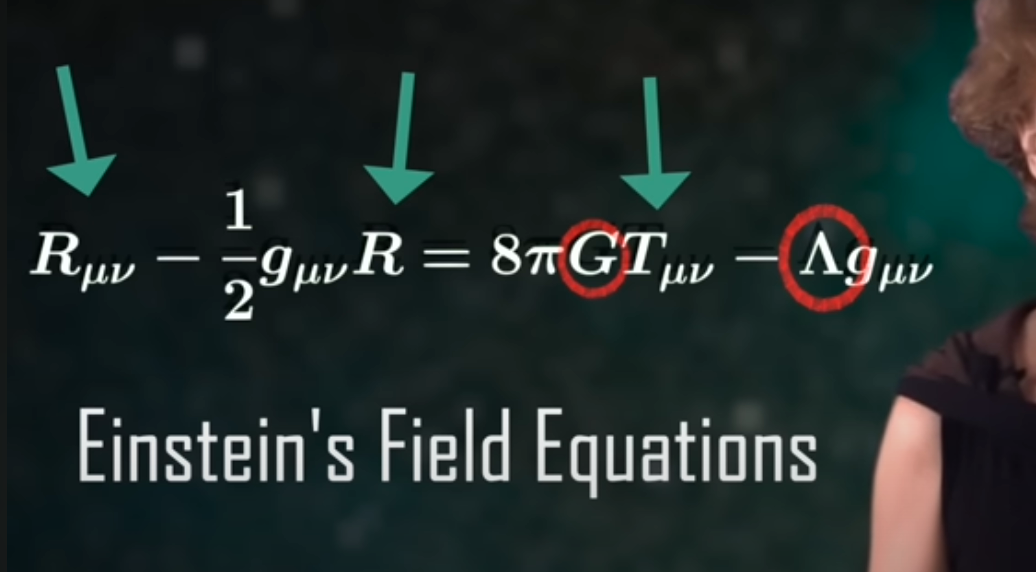
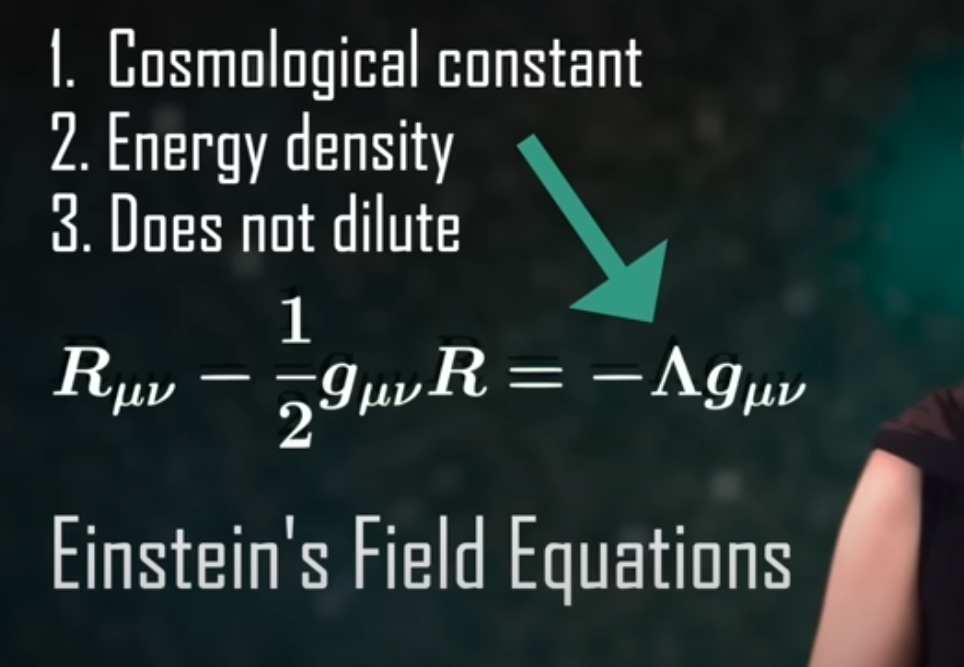
As you can see, because the energy density is mathematically negative, it doesn’t dilute like the others. For example, if you have a balloon and you blow into it, the energy decreases, but in this case, it would be like blowing into a “vacuum” balloon increasing the energy. That’s partially why the universe tends to expand.
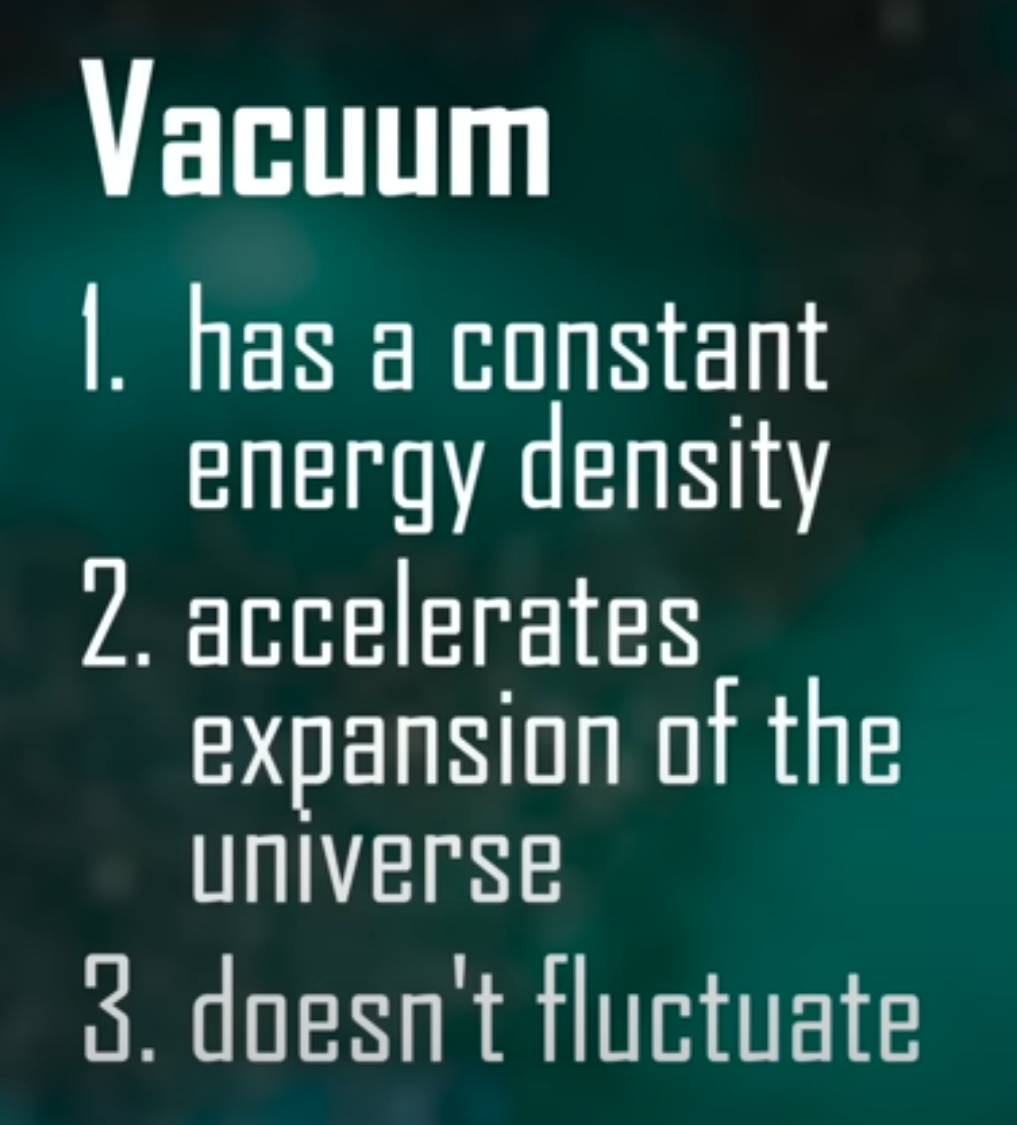
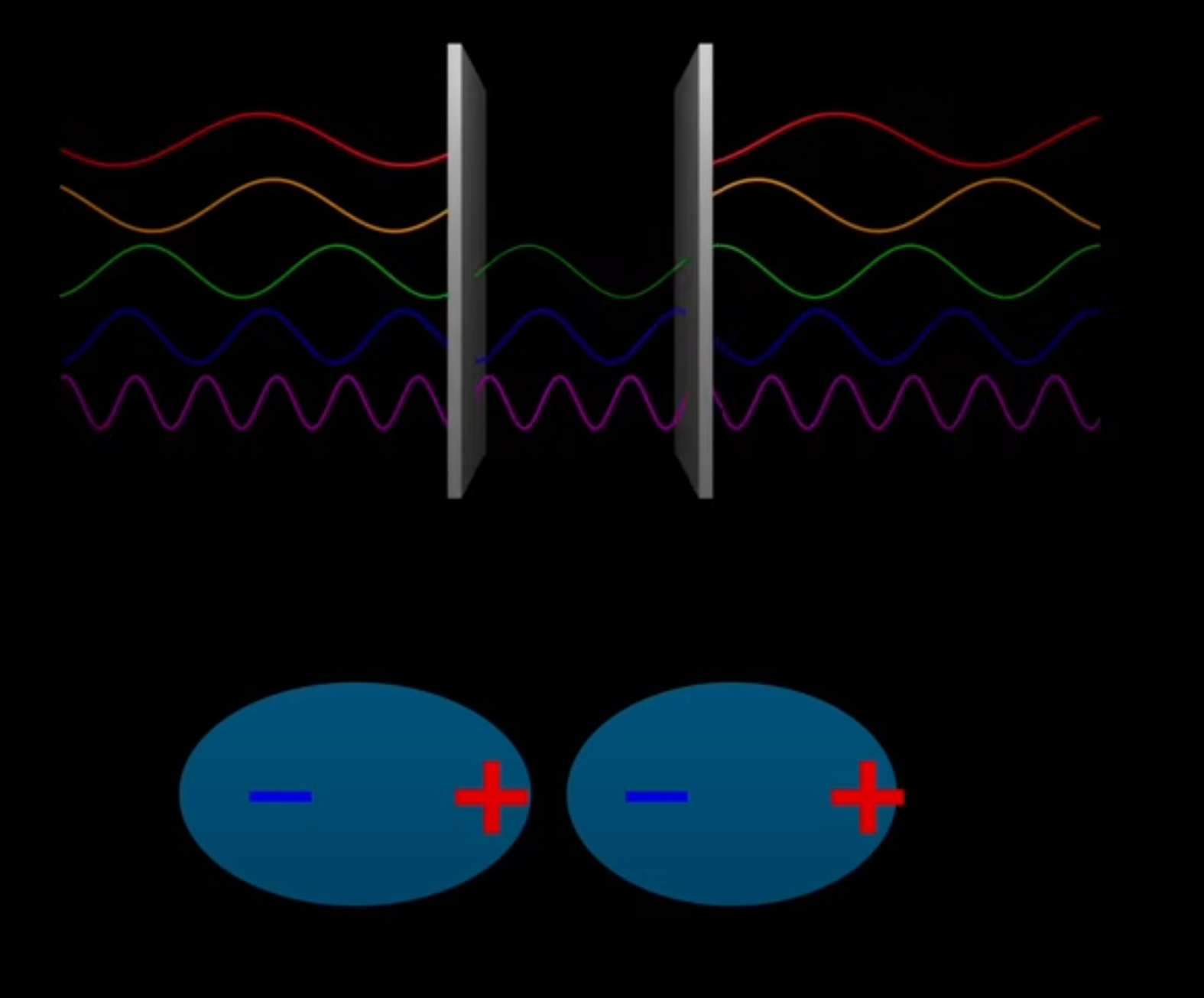
From this, we have to understand that vacuum has energy and even fluctuates. Yes, there is no such thing as total “nothingness” in our universe. When I say vacuum fluctuates, it is usually represented in quantum physics as waves. Now picture this: if you have two uncharged plates in a vacuum space and they are 2 cm apart, they have “more” vacuum space separating each other than those which are maybe 2 nm apart. The Casimir effect happens because at these distances, because there’s “less vacuum” separating the two plates, fewer waves from the vacuum energy are allowed to exist in this space, but it doesn’t mean that outside these plates (on the other side—exterior side) the vacuum energy behaves the same way.
If you have fewer waves—fluctuations of the vacuum energy—between the two plates but way more fluctuations outside, a force is going to push the two plates inward, which leads them to come into contact. It’s like having two plates submerged in a body of water and we assume there is a space empty of water between the two plates: the pressure of the water outside will push the plates inward. Of course, the phenomenon is not the same but just so you can have a comparison in mind.
Simple, right? The cavity between the two plates restricts the wavelengths to those which are half-integral divisors of the separation (based on the mathematical formula later developed). One example illustrating the force “produced” by the Casimir effect would be to imagine two plates separated by around 10 nm. In this case, the Casimir effect produces a force equivalent to one atmospheric pressure.
The Van der Waals solution: microscopic scale
To those who forgot or didn’t listen to physics courses in 11th grade, Van der Waals forces are weak, short-range attractive forces between molecules arising from temporary fluctuations in electron distribution. It’s a force coming from the fact that two certain molecules (two very electronegative molecules) that are getting close to each other will be bound for a certain amount of time.
But here’s where it gets fun: this force doesn’t come from any chemical bond. There’s no sharing or giving away of electrons. Instead, imagine two clouds of probability, electrons gravitating around their atoms, that briefly distort and create what we call instantaneous dipoles. These temporary dipoles induce dipoles in their neighbors, creating a tiny attractive force. That’s your basic Van der Waals attraction.
Now, what does that have to do with the Casimir effect? Well… maybe more than you’d think.
In fact, some physicists argue that the Casimir effect is just the macroscopic version of the Van der Waals force. When you zoom out from two molecules to two giant metal plates, it’s still all about electromagnetic field fluctuations, just now in a more collective and continuous way. The link between the two was explored in the 1950s through something called Lifshitz theory, which tried to build a bridge between microscopic forces (like Van der Waals) and macroscopic vacuum effects (like Casimir).
Imagine it like this: on the atomic scale, Van der Waals forces arise from fluctuations in the electron clouds. On a larger scale, the Casimir effect arises from fluctuations in the quantum vacuum. Both involve fluctuations. Both involve attraction. Both come from quantum electrodynamics.
But what’s the difference? Van der Waals forces are about two specific atoms or molecules, their distance, polarizability, and so on. The Casimir effect is about how boundaries (in this case, two plates) modify the allowed modes of the electromagnetic field between them. Some researchers even show that if you take the equations of the Casimir effect and push them to the very short distance limit, they start to look a lot like the ones we use to describe Van der Waals forces. That’s why many people say these two forces are not fundamentally different, but they’re just different faces of the same quantum coin.
In conclusion, the Casimir effect could be explained by the two faces of the same coin and it’s all about scale. My favorite explanation is the one about quantum energy because I actually learned that vacuum has energy fluctuations, which was something totally mind-blowing to me!
Thanks and see you next time!
credits:
Paper: Tunable vacuum-field control of fractional and integer quantum Hall phases
https://www.youtube.com/watch?v=OgJj49ws478
https://www.youtube.com/watch?v=0UBoo4KICCY
https://www.youtube.com/watch?v=E_FaLdwv-ug
https://fr.wikipedia.org/wiki/Hendrik_Casimir
https://www.youtube.com/watch?v=bl_wGRfbc3w