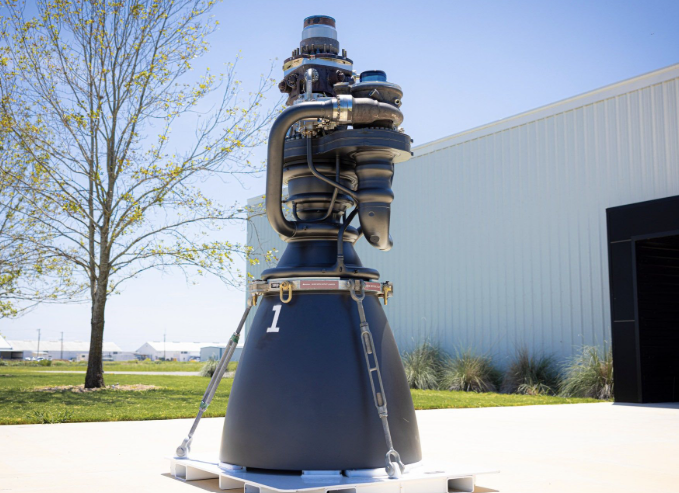
Since I’m very young, I’ve always followed news and the arrival of new technologies around aerospace engineering. It often seems very complicated and reserved to an elite capable of understanding how rockets and spaceships work. Turns out it’s not that hard if you deeply want to understand it.
One company I have particularly followed is SpaceX and their crazy plan to make spatial exploration common while colonizing Mars (only that). But to do this, SpaceX needs new technology, and here comes the Raptor engine, a groundbreaking piece of engineering that’s not just another rocket engine, but a complete rethinking of how we propel ourselves into space!
Because this topic is still kind of hard, I decided to explore a new way of writing my blog posts: less in a didactic/discovery process and more in a demonstration of the characteristics of the topic I’m talking about. This means that this article is going to be structured with titles and themes, which makes my life 5x easier, let’s be honest :) .
Ok… but what’s special about it?
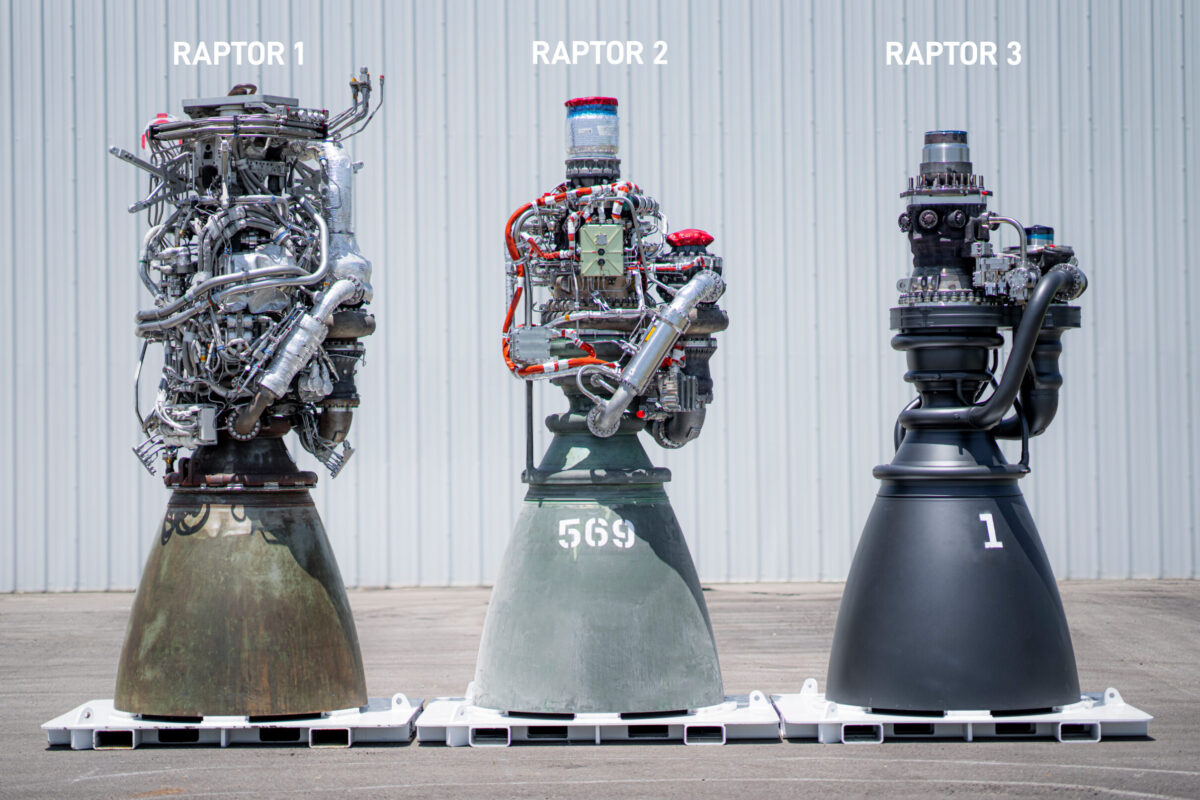
At first glance, the Raptor might seem like just another rocket engine (maybe not the V3, which really looks like it comes straight out of a Sci-Fi movie). But really dig a little deeper, and you’ll discover a marvel of technological advancement.
1/ Staged combustion
This is a big deal. Traditional rocket engines often use an “open-cycle design”, where some propellant is used to drive the turbines and then discarded. The Raptor, however, employs a “full-flow staged combustion cycle”, meaning ALL the propellant passes through the turbines before combustion (basically less waste). This results in:
- Higher efficiency (more fuel = more energy)
- Extended engine life (because of low operating temperature)
- => Overall, better performance
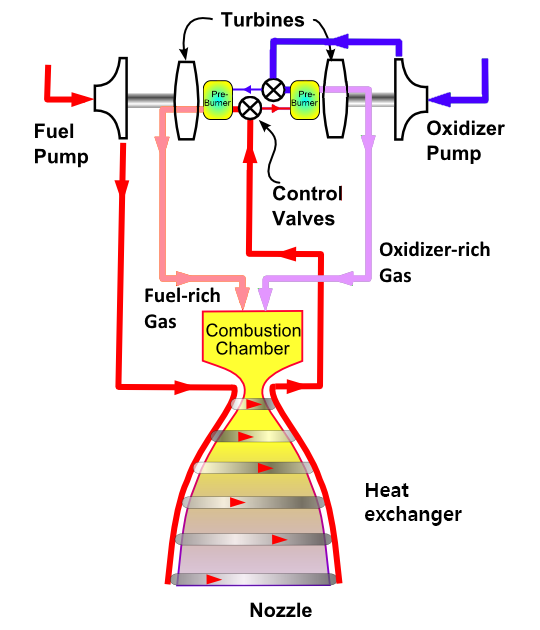
It’s worth noting that before the Raptor, no full-flow staged combustion engine had ever flown. It was first theorized by Soviets in the 1950s, who then made a prototype, but nothing incredible.
2/ Raptor uses methane and liquid oxygen (Methalox) propellants
Why methane? Several reasons:
- “Clean combustion”: reduces soot, making engines easier to reuse (extends life).
- A good balance between energy and storability. This is particularly true compared to hydrogen, which delivers more energy but is also super hard to store (volume and size of atoms).
- Finally, methane can be synthesized on Mars using the “Sabatier process”, combining atmospheric CO₂ with hydrogen. This means future missions could refuel on Mars for the return trip, which is exactly what SpaceX wants.
3/ Cryogenic propellants
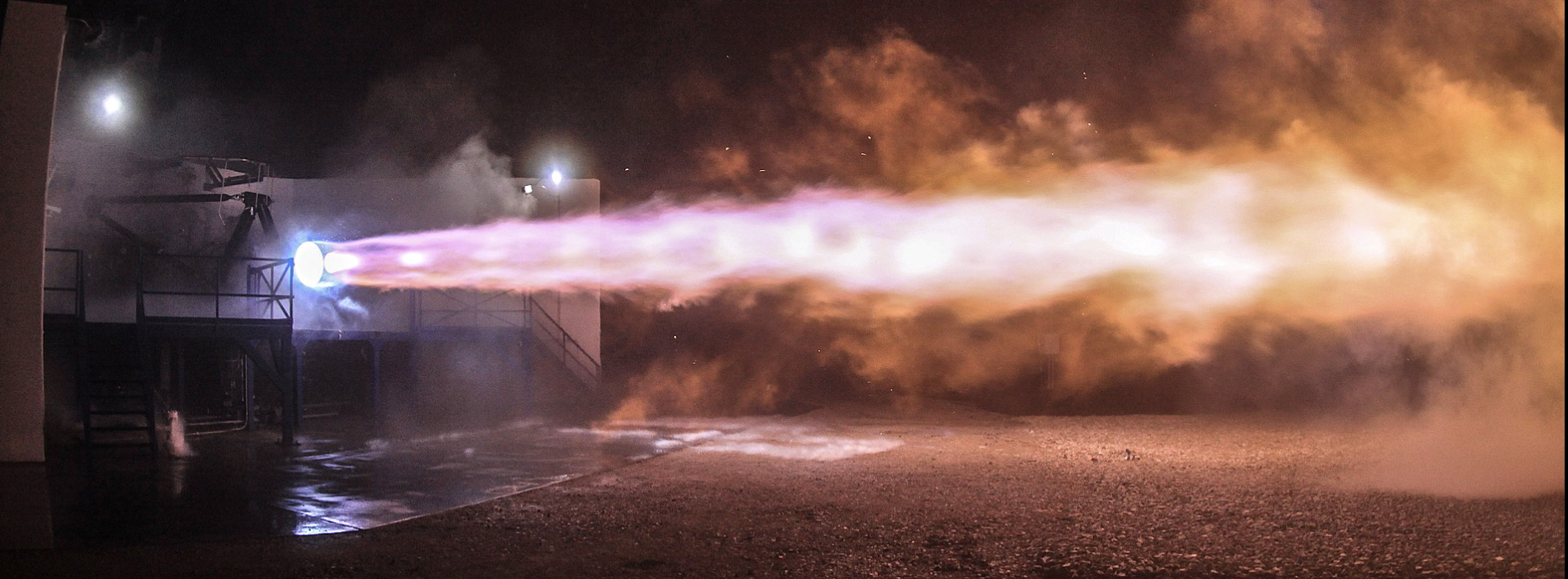
The Raptor uses subcooled liquid methane and oxygen (subcooled = very cold, lower than boiling point). Cooling the propellants below their boiling points increases their density, allowing more fuel to be stored in the same volume.
NB: this works for everything, that’s why ice cubes, for the same quantity, take more space than water.
This leads to:
- Increased thrust: more fuel means more power (in the long run)
- Reduced cavitation risk: denser fuels reduce the formation of vapor bubbles that can damage the engine
Also, how the propellant enters and burns in the combustion chamber (seems simple? NO!). Liquid methane and liquid oxygen are stored in separate cryogenic tanks aboard the rocket. From there, each propellant is directed to its respective “turbopump”, which raises the pressure to the levels required for combustion (yes, you need pressure for combustion). The Raptor then employs a “full-flow staged combustion cycle”, meaning BOTH propellants pass through preburners before entering the main combustion chamber.
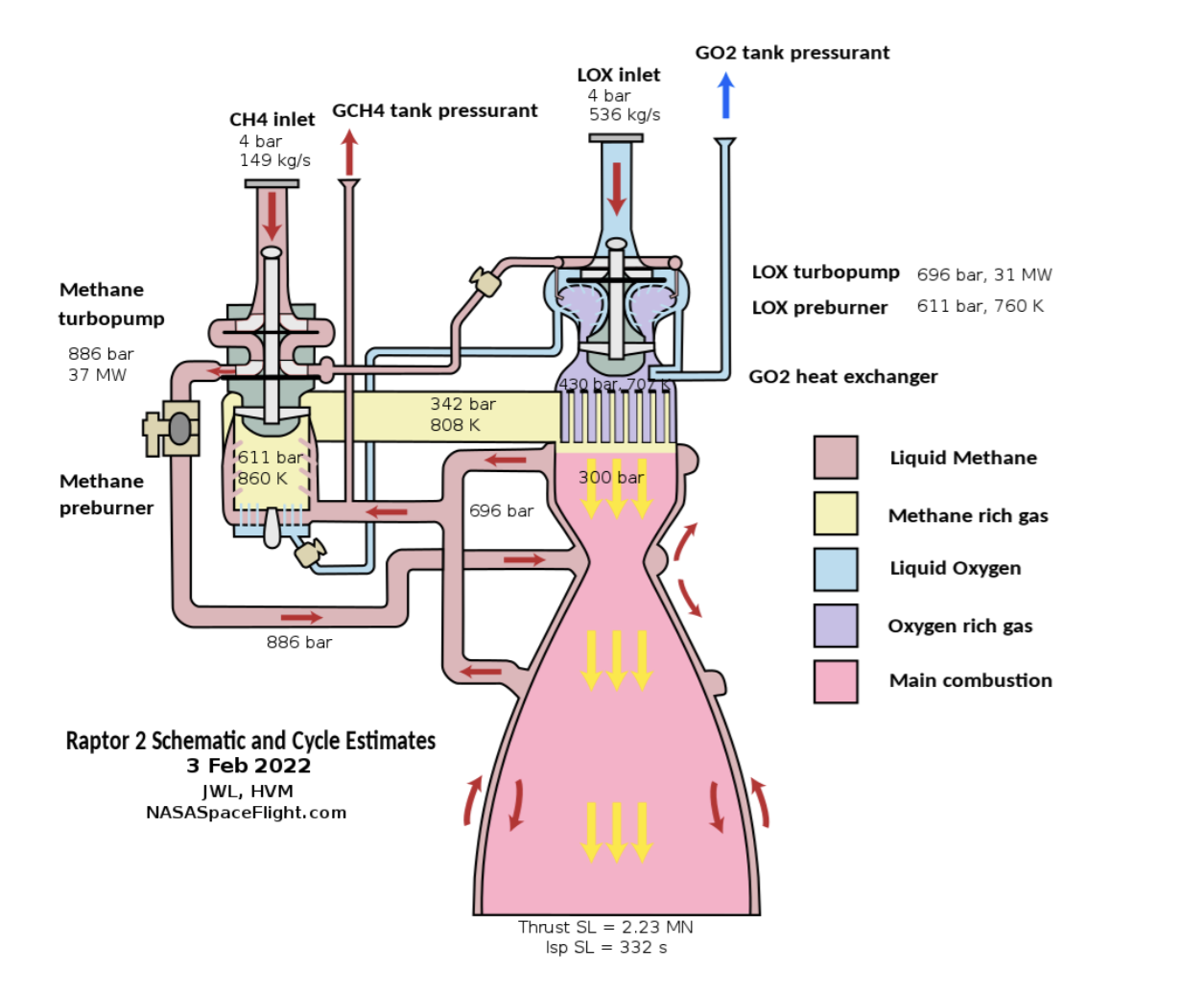
In the fuel-rich preburner, a small amount of LOX combusts with methane, producing hot gas that drives the methane turbopump. Meanwhile, in the oxidizer-rich preburner, a small amount of methane combusts with LOX to generate hot, oxidizer-rich gas that powers the oxygen turbopump. The hot gases from both preburners, then, under high pressure and temperature, are injected into the main combustion chamber where they combust COMPLETELY, producing the immense thrust needed to propel the rocket.
(Hope this explanation wasn’t that messy.)
4/ Why is this incredible and how did SpaceX manage to make this?
SpaceX didn’t just innovate in combustion cycles and fuel choices. They’ve also revolutionized how rocket engines are built.
a/ How does 3D printing transform rocket engine manufacturing?
Many components of early Raptor prototypes were manufactured using 3D printing (YEAH, same thing as the common one everyone thinks about when saying “3D printing”), including turbopumps and injectors. This approach:
- Speeds up development
- Reduces costs = less material waste + faster production
- Enables complex designs (that’s the best part to me, because it opens up the field of possibility when thinking about prototypes)
I’m convinced that in the future, 3D printing will be more and more common and that it’s something I need to take advantage of because it helps build designs efficiently and flawlessly.
b/ What materials make the Raptor engine so resistant and efficient?
I’m gonna be fast here, not that it’s not interesting, but it’s hard to explain. I haven’t done a lot of research on this and it should be an entirely new post. But basically, SpaceX developed in-house superalloys like “SX300” and later “SX500” for engine components. These materials can withstand extreme temperatures and pressures, crucial for the demanding environment inside a rocket engine.
5/ What development strategy did SpaceX use?
This is less about engineering and more about business and economics, but I think it’s important because in order to build and innovate, you need money, and the choice to give you the money you need comes from these strategies.
One of the most incredible things SpaceX did in their overall strategy is that they acted like a little startup. This means that instead of aiming for perfection from the outset, SpaceX embraces a rapid iteration model:
- Design: create a prototype quickly
- Test: push it to its limits
- Learn: analyze failures and successes
- Improve
- Repeat this again and again
This approach was very good and has led to several versions of the Raptor:
- Raptor V1: the initial prototype, used for early testing and development
- Raptor V2: improved performance and manufacturability
- Raptor V3: further enhancements, including design simplifications and better integration of components (this is the one that looks like it comes from a Sci-Fi movie)
6/ Mass production
As I said, SpaceX’s primary focus during its development wasn’t solely on achieving the highest possible efficiency. Instead, they emphasized simplicity and constant improvement with the possibility of mass production:
=> Cost-effectiveness: by simplifying designs and reducing the number of components, SpaceX aimed to lower production costs.
=> Mass producibility: the engine was designed with scalability in mind, ensuring that it could be produced in large quantities. This is very important for the future of the company.
By embracing rapid prototyping and accepting failures as learning opportunities, SpaceX accelerated the Raptor’s development timeline. (NB: that’s probably something I need to learn for the future.)
7/ Finally, the future of these engines
You need to understand that the Raptor engine isn’t only a good engine. It’s a brand new way of conceiving space exploration:
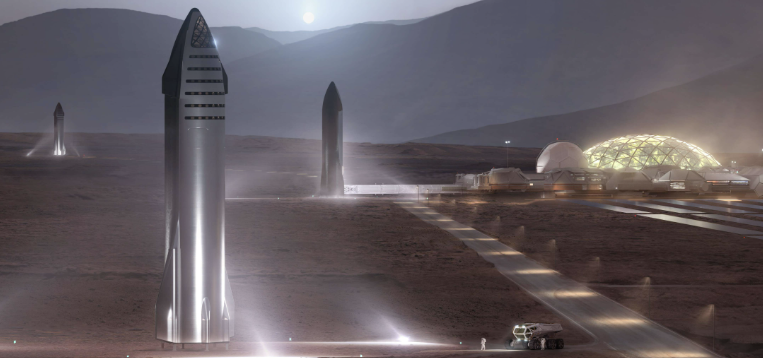
- Starship missions: Each Starship vehicle will be powered by multiple Raptor engines, enabling missions to the Moon and Mars (+ methane can be produced on Mars)
- Reusability: designed for rapid reuse, and we all know how SpaceX loves reusability
- Mars colonization: thanks again to methane
Anyway, I hope this very long but fascinating (to me) article was enjoyable. I feel like engineers and entrepreneurs have so much to learn in this engine’s story, and I always found it very interesting even though I never did such advanced research on the subject…
See you!
credits:
https://www.contrepoints.org/2024/08/30/478622-le-raptor-v3-de-starship-est-la-quintessence-des-moteurs-fusee
https://hal.science/hal-04536141v1/file/MECH_6191_Project.pdf
https://en.wikipedia.org/wiki/SpaceX_Raptor?utm_source=chatgpt.com
https://www.youtube.com/watch?v=S8DFBiMaXsU
https://www.youtube.com/watch?v=nP9OaYUjvdE